
India's Energy Transformation: Building the Foundation for Sustainable Growth
Read Next
News 1
Content Summary
News 2
Content Summary
News 3
Content Summary
A great investment outcome blends deep conviction with disciplined execution across the full deal lifecycle - from sector selection to exit. While luck can tilt outcomes at the margin, repeatable success is built on four pillars: research depth, founder selection, operational value creation, and valuation discipline.
Recent studies highlight that revenue growth and business improvement now account for nearly half of private equity value creation. In this environment, sectoral tailwinds, leadership quality, and hands-on value creation have become central to driving returns.
India stands at the threshold of an unprecedented energy transformation, driven by surging demand, rapid renewable capacity expansion, and a bold vision to achieve energy security through domestic capabilities. As the world's third-largest electricity consumer, India's energy transition represents both the scale of opportunity and the urgency required to power the nation's economic ascent while securing sustainability.
This transformation unfolds across multiple dimensions: expanding clean generation capacity, modernizing grid infrastructure to integrate 500 GW of renewables by 2030, diversifying into new energy sectors, deploying storage solutions at unprecedented scale, and leveraging digitization to optimize efficiency. Unlike advanced economies like Europe, which focus on optimizing mature systems, India must simultaneously build new capacity and digitize operations from a lower baseline.

Clean Generation: Racing to Meet Soaring Demand
India's electricity demand trajectory fundamentally differs from all major economies. After expanding 6% in 2024, demand is expected to moderate to 4% growth in 2025 before accelerating to 6.6% in 2026. This contrasts sharply with mature economies: Europe has seen consumption decline since 2021, and even China's growth is moderating to 3-4% annually.
The per capita consumption gap reveals the scale of India's opportunity. India's per capita electricity consumption stands at just 1.36 MWh annually compared to China's 6.64 MWh and the United States' 12.44 MWh. This 5-10x gap represents massive catch-up potential as India's economy grows. Industrial energy consumption alone is growing at 7.4% compound annual growth rate in India, while Europe's declined 5% in 2023.
Solar energy anchors India's clean capacity buildout, with installed capacity reaching 125 GW by August 2025. This represents remarkable progress toward the government's target of 500 GW non-fossil fuel capacity by 2030. Combined solar and wind output grew 20% year-over-year in the first half of 2025, reaching nearly 14% share in the generation mix.
Decentralized deployment is accelerating rapidly, with rooftop solar installations surging 158% in H1 2025. This shift toward consumer-centric generation reduces transmission losses while enabling greater energy access. The momentum is supported by domestic manufacturing capacity exceeding 100 GW across modules and components, strengthening supply chain resilience.
India is rapidly expanding into green hydrogen, nuclear, and biomass to diversify its energy mix. Nuclear capacity is targeted to grow to 22 GW by 2031, while biomass contributes about 10 GW currently. Sustainable aviation fuel represents a growing frontier, with India's National Bio-Energy Mission targeting 5% SAF blending by 2030, leveraging domestic agricultural residues.
Grid Modernization: Building the Backbone for Renewable Integration
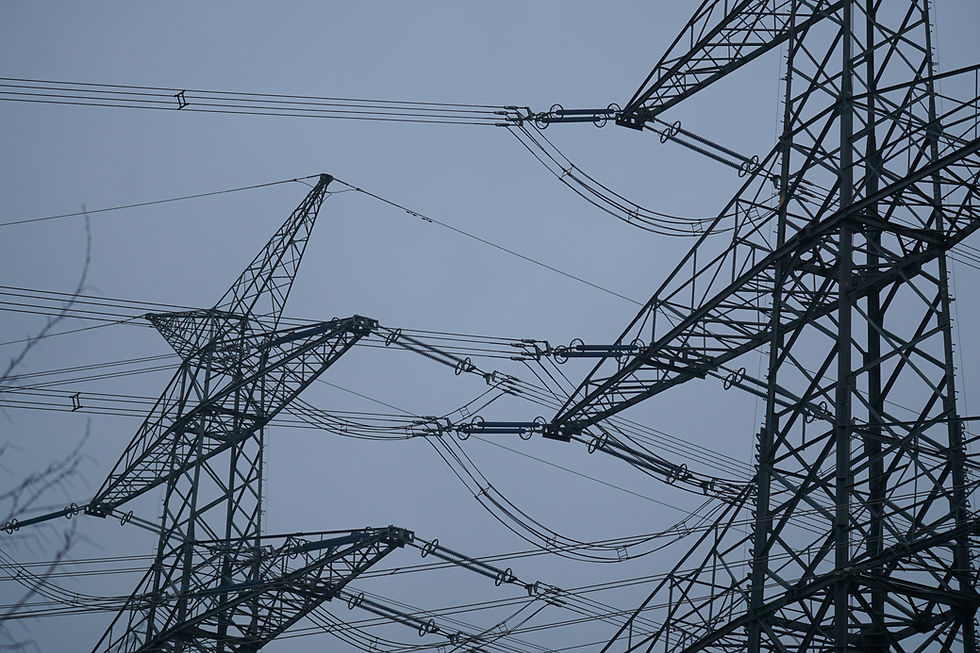
India's renewable energy ambitions require massive grid infrastructure expansion to integrate 500 GW of clean capacity by 2030. The Central Electricity Authority estimates this will necessitate approximately 51,000 circuit-kilometers of transmission lines and 433,500 MVA of transformation capacity, addressing an estimated 42% transmission shortfall.
Tackling high Aggregate Technical and Commercial (AT&C) losses remains central to modernization efforts. National AT&C losses stood at 16.3% in FY24, down from 21.9% in FY21, but still significantly above the global average of approximately 7%. Smart metering deployment offers immediate leverage—the government plans to install 250 million smart meters by 2027, though less than 15% has been completed due to supply chain constraints.
India's grid is also digitizing, with advanced monitoring and forecasting systems enabling real-time visibility, better demand prediction, and proactive peak management that collectively help reduce grid load and curb commercial losses.
Storage and Flexibility: Enabling Grid Reliability at Scale
Energy storage is transitioning from pilot projects to mainstream deployment, with approximately 25% of new renewable tenders now mandating co-located batteries. India's renewables-plus-storage costs have reached €0.031-€0.036 per kWh compared to €0.047-€0.057 per kWh for thermal generation, creating clear economic incentives for clean energy adoption. India has already achieved lower cost than thermal power for battery + renewable energy:
Digital Infrastructure: Enabling Efficient Energy Markets
Green Energy Open Access reforms are streamlining approvals for direct renewable procurement, accelerating corporate decarbonization. The Federation of Indian Discoms is developing an open, interoperable grid layer similar to the UPI transformation in financial services, enabling prosumer markets and virtual power plant models.
Time-of-day tariffs, widely deployed in Europe but nascent in India, represent significant opportunity for demand optimization. Smart metering infrastructure provides the foundation for granular pricing signals that can shift demand patterns and reduce peak loads.
Efficiency: Maximizing Impact Through Conservation
India's efficiency potential remains vast given rapid urbanization and legacy equipment prevalence. The UJALA program exemplifies this opportunity—having distributed over 368.7 million LED bulbs, achieving estimated annual energy savings of 48.42 billion kWh with avoided peak demand of 9,789 MW and greenhouse gas emission reductions of 39.3 million tonnes CO₂.
LED procurement prices dropped from ₹310 in 2014 to ₹38.45 in 2024 through demand aggregation, while efficiency improved from 100 to 150 lumens per watt. HVAC system upgrades can reduce energy consumption by 20-40% while industrial modernization delivers 15-30% savings with short payback periods.

The Sustainability Business Imperative
These structural realities converge to create one of the most compelling sustainability-driven investment theses globally. The financial markets are responding decisively:
-
Outbound investments rose 67% to USD 41.6 billion in FY25, heavily ESG-driven.
-
Low-carbon technologies could represent an USD 80 billion market by 2030.
-
India’s solar module manufacturing capacity nearly doubled from 38 GW in March 2024 to 74 GW in March 2025, while PV cell capacity expanded from 9 GW to 25 GW.
The opportunity is clear: renewable energy, electric mobility, green hydrogen, and climate technology are no longer niche—they are the future of India’s growth model.
Digital Advantage: Multiplying Impact
India’s digital economy strengthens this transformation. It contributed 11.7% of GDP in 2022-23, employs 14.7 million workers, and grows twice as fast as the broader economy, with productivity five times higher than traditional sectors.
Smart grid technologies enable more efficient energy distribution and renewable
integration. Digital platforms facilitate more efficient resource allocation across the economy, from logistics optimization to demand-responsive energy management.
The convergence extends to traditional sectors. Digital technologies enable precision agriculture that improves crop yields while reducing resource consumption. Smart city systems optimize energy and water usage while improving citizen services. Financial technology platforms facilitate access to green financing and sustainable investment products for a broader population base.

Economic Transformation Through Sustainability
The data demonstrates that sustainability-linked businesses represent India's path toward faster, more efficient, and more resilient economic growth. Renewable energy provides energy security at lower costs than other alternatives. Sustainable infrastructure construction delivers higher long-term value and operational efficiency. Climate-resilient agricultural practices protect food security and farmer incomes. Digital technologies enable resource optimization across all economic sectors.
This transformation directly benefits India's 1.4 billion citizens through multiple channels. Energy independence reduces inflation pressures and currency volatility while creating domestic employment in high-technology sectors. Efficient infrastructure reduces transportation and logistics costs while improving quality of life in urban and rural areas. Climate resilience protects agricultural livelihoods and food security. Digital access enables broader participation in the modern economy while providing access to education, healthcare, and financial services.
The economic logic is compelling: sustainability-linked businesses address India's most pressing structural challenges while capitalizing on its greatest competitive advantages—demographic dividend, technological capability, and policy commitment. Rather than constraining growth, sustainability provides the framework for achieving India's economic potential while ensuring that prosperity benefits all citizens across a resilient, self-reliant economy positioned for long-term global leadership.
The foundation is established, the economic incentives are aligned, and the transformation is already underway. India's future economic success will be measured not just by growth rates, but by its ability to deliver prosperity, security, and resilience for the world's largest population through development pathways that other nations will seek to emulate.