
India's Energy Transformation: Building the Foundation for Sustainable Growth
As global capital flows into emerging markets accelerate, investors are increasingly exposed to unique environmental, social, and governance (ESG) risks and opportunities to create real ESG impact. ESG integration is, therefore, a strategic imperative, as it offers both a risk-management framework and a value-creation tool—especially as these economies transition toward more inclusive and sustainable growth.
Too often, however, ESG is seen narrowly—as a screening tool to weed out “bad actors” or avoid reputational risk. In practice, ESG integration in investment decision-making exists along a spectrum. At one end are strategies that screen investments based on their ESG practices. At the other end are strategies, often called “impact investing”, which are intentional and outcome-driven: these strategies set out to achieve specific, measurable ESG outcomes. Along the spectrum are other general responsible or sustainable investing strategies that seek to mitigate these risks and avoid harms / create sustainable outcomes.
How can ESG turn risk into long-term resilience?
Download ProsperETE’s report to uncover the insights shaping smarter
investment decisions.
Digital Infrastructure: Enabling Efficient Energy Markets
Green Energy Open Access reforms are streamlining approvals for direct renewable procurement, accelerating corporate decarbonization. The Federation of Indian Discoms is developing an open, interoperable grid layer similar to the UPI transformation in financial services, enabling prosumer markets and virtual power plant models.
Time-of-day tariffs, widely deployed in Europe but nascent in India, represent significant opportunity for demand optimization. Smart metering infrastructure provides the foundation for granular pricing signals that can shift demand patterns and reduce peak loads.
Efficiency: Maximizing Impact Through Conservation
India's efficiency potential remains vast given rapid urbanization and legacy equipment prevalence. The UJALA program exemplifies this opportunity—having distributed over 368.7 million LED bulbs, achieving estimated annual energy savings of 48.42 billion kWh with avoided peak demand of 9,789 MW and greenhouse gas emission reductions of 39.3 million tonnes CO₂.
LED procurement prices dropped from ₹310 in 2014 to ₹38.45 in 2024 through demand aggregation, while efficiency improved from 100 to 150 lumens per watt. HVAC system upgrades can reduce energy consumption by 20-40% while industrial modernization delivers 15-30% savings with short payback periods.
India stands at the threshold of an unprecedented energy transformation, driven by surging demand, rapid renewable capacity expansion, and a bold vision to achieve energy security through domestic capabilities. As the world's third-largest electricity consumer, India's energy transition represents both the scale of opportunity and the urgency required to power the nation's economic ascent while securing sustainability.
This transformation unfolds across multiple dimensions: expanding clean generation capacity, modernizing grid infrastructure to integrate 500 GW of renewables by 2030, diversifying into new energy sectors, deploying storage solutions at unprecedented scale, and leveraging digitization to optimize efficiency. Unlike advanced economies like Europe, which focus on optimizing mature systems, India must simultaneously build new capacity and digitize operations from a lower baseline.

Depending on where an investor’s strategy lies on the spectrum and irrespective of sector, ESG provides a useful framework. Whether it is an agri value chain company working with farmers, a battery-as-a-service provider focused on gig economy participants, or a company providing returnable packing and logistics solutions, applying the ESG lens enables long-term value for stakeholders. It helps investors back companies and business models that reduce agricultural runoff (ie., avoid harm), improve working conditions and earning capacity for delivery personnel (ie., achieve sustainable outcomes), or cut down on single-use packaging waste and enable CO2 mitigation (ie., intentional and measurable positive impact). It thus ensures capital deployment in ways that protect ecosystems, enhance livelihoods, reduce emissions and create durable value.
As ESG becomes more central to capital allocation, stakeholders ranging from family offices to institutional investors, and impact funds are integrating it into their decision-making matrix.
Clean Generation: Racing to Meet Soaring Demand
India's electricity demand trajectory fundamentally differs from all major economies. After expanding 6% in 2024, demand is expected to moderate to 4% growth in 2025 before accelerating to 6.6% in 2026. This contrasts sharply with mature economies: Europe has seen consumption decline since 2021, and even China's growth is moderating to 3-4% annually.
The per capita consumption gap reveals the scale of India's opportunity. India's per capita electricity consumption stands at just 1.36 MWh annually compared to China's 6.64 MWh and the United States' 12.44 MWh. This 5-10x gap represents massive catch-up potential as India's economy grows. Industrial energy consumption alone is growing at 7.4% compound annual growth rate in India, while Europe's declined 5% in 2023.
Solar energy anchors India's clean capacity buildout, with installed capacity reaching 125 GW by August 2025. This represents remarkable progress toward the government's target of 500 GW non-fossil fuel capacity by 2030. Combined solar and wind output grew 20% year-over-year in the first half of 2025, reaching nearly 14% share in the generation mix.
Decentralized deployment is accelerating rapidly, with rooftop solar installations surging 158% in H1 2025. This shift toward consumer-centric generation reduces transmission losses while enabling greater energy access. The momentum is supported by domestic manufacturing capacity exceeding 100 GW across modules and components, strengthening supply chain resilience.
India is rapidly expanding into green hydrogen, nuclear, and biomass to diversify its energy mix. Nuclear capacity is targeted to grow to 22 GW by 2031, while biomass contributes about 10 GW currently. Sustainable aviation fuel represents a growing frontier, with India's National Bio-Energy Mission targeting 5% SAF blending by 2030, leveraging domestic agricultural residues.
Grid Modernization: Building the Backbone for Renewable Integration
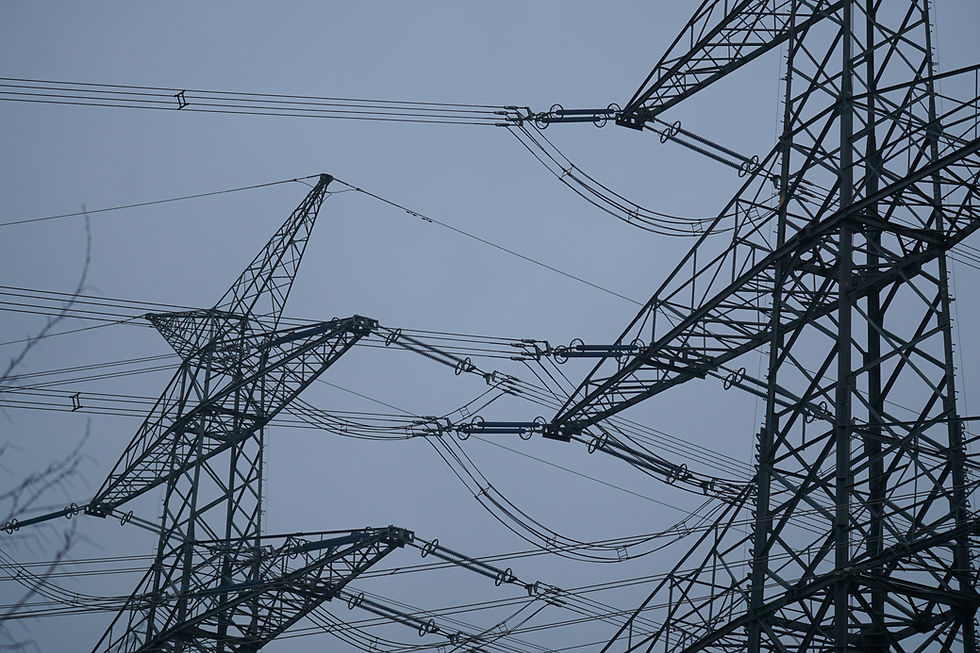
India's renewable energy ambitions require massive grid infrastructure expansion to integrate 500 GW of clean capacity by 2030. The Central Electricity Authority estimates this will necessitate approximately 51,000 circuit-kilometers of transmission lines and 433,500 MVA of transformation capacity, addressing an estimated 42% transmission shortfall.
Tackling high Aggregate Technical and Commercial (AT&C) losses remains central to modernization efforts. National AT&C losses stood at 16.3% in FY24, down from 21.9% in FY21, but still significantly above the global average of approximately 7%. Smart metering deployment offers immediate leverage—the government plans to install 250 million smart meters by 2027, though less than 15% has been completed due to supply chain constraints.
India's grid is also digitizing, with advanced monitoring and forecasting systems enabling real-time visibility, better demand prediction, and proactive peak management that collectively help reduce grid load and curb commercial losses.
Storage and Flexibility: Enabling Grid Reliability at Scale
Energy storage is transitioning from pilot projects to mainstream deployment, with approximately 25% of new renewable tenders now mandating co-located batteries. India's renewables-plus-storage costs have reached €0.031-€0.036 per kWh compared to €0.047-€0.057 per kWh for thermal generation, creating clear economic incentives for clean energy adoption. India has already achieved lower cost than thermal power for battery + renewable energy:
Digital Infrastructure: Enabling Efficient Energy Markets
Green Energy Open Access reforms are streamlining approvals for direct renewable procurement, accelerating corporate decarbonization. The Federation of Indian Discoms is developing an open, interoperable grid layer similar to the UPI transformation in financial services, enabling prosumer markets and virtual power plant models.
Time-of-day tariffs, widely deployed in Europe but nascent in India, represent significant opportunity for demand optimization. Smart metering infrastructure provides the foundation for granular pricing signals that can shift demand patterns and reduce peak loads.
Efficiency: Maximizing Impact Through Conservation
India's efficiency potential remains vast given rapid urbanization and legacy equipment prevalence. The UJALA program exemplifies this opportunity—having distributed over 368.7 million LED bulbs, achieving estimated annual energy savings of 48.42 billion kWh with avoided peak demand of 9,789 MW and greenhouse gas emission reductions of 39.3 million tonnes CO₂.
LED procurement prices dropped from ₹310 in 2014 to ₹38.45 in 2024 through demand aggregation, while efficiency improved from 100 to 150 lumens per watt. HVAC system upgrades can reduce energy consumption by 20-40% while industrial modernization delivers 15-30% savings with short payback periods.