
India's Energy Transformation: Building the Foundation for Sustainable Growth
India stands at the threshold of an unprecedented energy transformation, driven by surging demand, rapid renewable capacity expansion, and a bold vision to achieve energy security through domestic capabilities. As the world's third-largest electricity consumer, India's energy transition represents both the scale of opportunity and the urgency required to power the nation's economic ascent while securing sustainability.
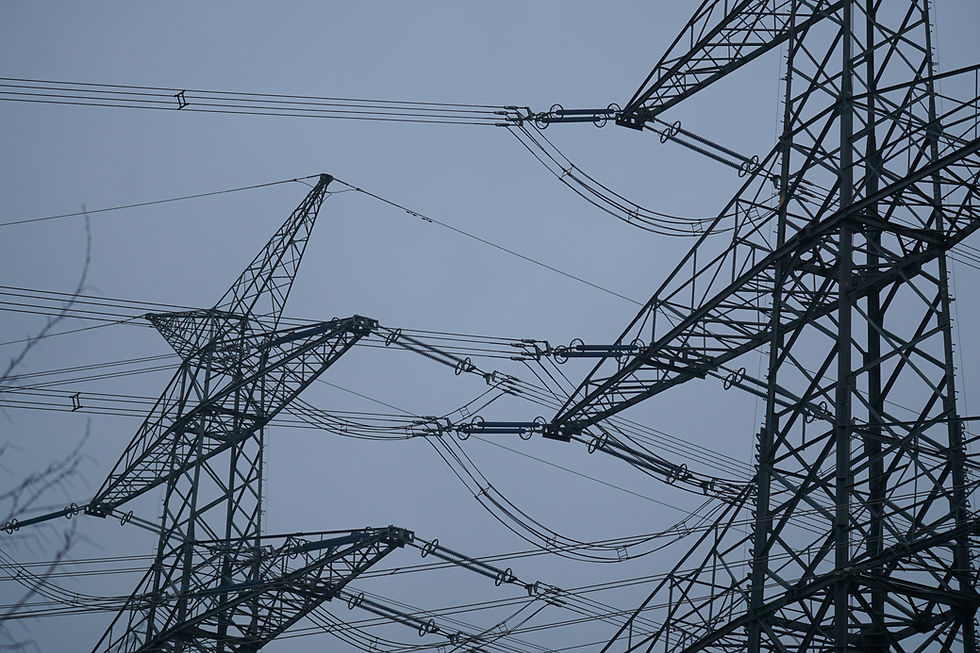
This transformation unfolds across multiple dimensions: expanding clean generation capacity, modernizing grid infrastructure to integrate 500 GW of renewables by 2030, diversifying into new energy sectors, deploying storage solutions at unprecedented scale, and leveraging digitization to optimize efficiency. Unlike advanced economies like Europe, which focus on optimizing mature systems, India must simultaneously build new capacity and digitize operations from a lower baseline.
Read Next
News 1
Content Summary
News 2
Content Summary
News 3
Content Summary
Sector Snapshot

Clean Generation: Racing to Meet Soaring Demand
India's electricity demand trajectory fundamentally differs from all major economies. After expanding 6% in 2024, demand is expected to moderate to 4% growth in 2025 before accelerating to 6.6% in 2026. This contrasts sharply with mature economies: Europe has seen consumption decline since 2021, and even China's growth is moderating to 3-4% annually.
The per capita consumption gap reveals the scale of India's opportunity. India's per capita electricity consumption stands at just 1.36 MWh annually compared to China's 6.64 MWh and the United States' 12.44 MWh. This 5-10x gap represents massive catch-up potential as India's economy grows. Industrial energy consumption alone is growing at 7.4% compound annual growth rate in India, while Europe's declined 5% in 2023.
Solar energy anchors India's clean capacity buildout, with installed capacity reaching 125 GW by August 2025. This represents remarkable progress toward the government's target of 500 GW non-fossil fuel capacity by 2030. Combined solar and wind output grew 20% year-over-year in the first half of 2025, reaching nearly 14% share in the generation mix.
Decentralized deployment is accelerating rapidly, with rooftop solar installations surging 158% in H1 2025. This shift toward consumer-centric generation reduces transmission losses while enabling greater energy access. The momentum is supported by domestic manufacturing capacity exceeding 100 GW across modules and components, strengthening supply chain resilience.
India is rapidly expanding into green hydrogen, nuclear, and biomass to diversify its energy mix. Nuclear capacity is targeted to grow to 22 GW by 2031, while biomass contributes about 10 GW currently. Sustainable aviation fuel represents a growing frontier, with India's National Bio-Energy Mission targeting 5% SAF blending by 2030, leveraging domestic agricultural residues.