
India's Energy Transformation: Building the Foundation for Sustainable Growth
Read Next
News 1
Content Summary
News 2
Content Summary
News 3
Content Summary
A great investment outcome blends deep conviction with disciplined execution across the full deal lifecycle - from sector selection to exit. While luck can tilt outcomes at the margin, repeatable success is built on four pillars: research depth, founder selection, operational value creation, and valuation discipline.
Recent studies highlight that revenue growth and business improvement now account for nearly half of private equity value creation. In this environment, sectoral tailwinds, leadership quality, and hands-on value creation have become central to driving returns.
India stands at the threshold of an unprecedented energy transformation, driven by surging demand, rapid renewable capacity expansion, and a bold vision to achieve energy security through domestic capabilities. As the world's third-largest electricity consumer, India's energy transition represents both the scale of opportunity and the urgency required to power the nation's economic ascent while securing sustainability.
This transformation unfolds across multiple dimensions: expanding clean generation capacity, modernizing grid infrastructure to integrate 500 GW of renewables by 2030, diversifying into new energy sectors, deploying storage solutions at unprecedented scale, and leveraging digitization to optimize efficiency. Unlike advanced economies like Europe, which focus on optimizing mature systems, India must simultaneously build new capacity and digitize operations from a lower baseline.
Clean Generation: Racing to Meet Soaring Demand
India's electricity demand trajectory fundamentally differs from all major economies. After expanding 6% in 2024, demand is expected to moderate to 4% growth in 2025 before accelerating to 6.6% in 2026. This contrasts sharply with mature economies: Europe has seen consumption decline since 2021, and even China's growth is moderating to 3-4% annually.
The per capita consumption gap reveals the scale of India's opportunity. India's per capita electricity consumption stands at just 1.36 MWh annually compared to China's 6.64 MWh and the United States' 12.44 MWh. This 5-10x gap represents massive catch-up potential as India's economy grows. Industrial energy consumption alone is growing at 7.4% compound annual growth rate in India, while Europe's declined 5% in 2023.
Solar energy anchors India's clean capacity buildout, with installed capacity reaching 125 GW by August 2025. This represents remarkable progress toward the government's target of 500 GW non-fossil fuel capacity by 2030. Combined solar and wind output grew 20% year-over-year in the first half of 2025, reaching nearly 14% share in the generation mix.
Decentralized deployment is accelerating rapidly, with rooftop solar installations surging 158% in H1 2025. This shift toward consumer-centric generation reduces transmission losses while enabling greater energy access. The momentum is supported by domestic manufacturing capacity exceeding 100 GW across modules and components, strengthening supply chain resilience.
India is rapidly expanding into green hydrogen, nuclear, and biomass to diversify its energy mix. Nuclear capacity is targeted to grow to 22 GW by 2031, while biomass contributes about 10 GW currently. Sustainable aviation fuel represents a growing frontier, with India's National Bio-Energy Mission targeting 5% SAF blending by 2030, leveraging domestic agricultural residues.
Grid Modernization: Building the Backbone for Renewable Integration
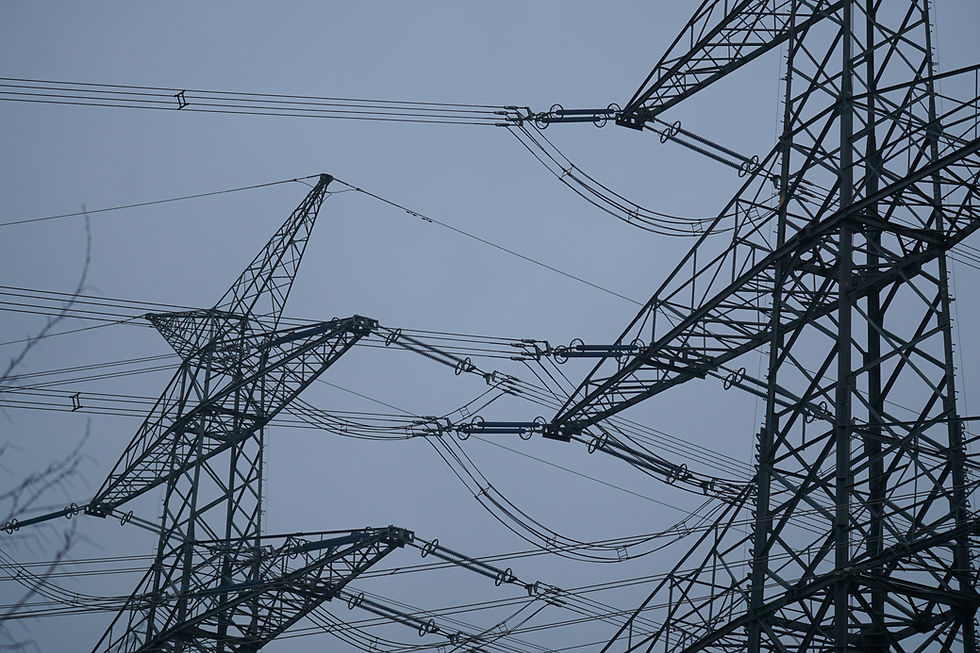
India's renewable energy ambitions require massive grid infrastructure expansion to integrate 500 GW of clean capacity by 2030. The Central Electricity Authority estimates this will necessitate approximately 51,000 circuit-kilometers of transmission lines and 433,500 MVA of transformation capacity, addressing an estimated 42% transmission shortfall.
Tackling high Aggregate Technical and Commercial (AT&C) losses remains central to modernization efforts. National AT&C losses stood at 16.3% in FY24, down from 21.9% in FY21, but still significantly above the global average of approximately 7%. Smart metering deployment offers immediate leverage—the government plans to install 250 million smart meters by 2027, though less than 15% has been completed due to supply chain constraints.
India's grid is also digitizing, with advanced monitoring and forecasting systems enabling real-time visibility, better demand prediction, and proactive peak management that collectively help reduce grid load and curb commercial losses.
Storage and Flexibility: Enabling Grid Reliability at Scale
Energy storage is transitioning from pilot projects to mainstream deployment, with approximately 25% of new renewable tenders now mandating co-located batteries. India's renewables-plus-storage costs have reached €0.031-€0.036 per kWh compared to €0.047-€0.057 per kWh for thermal generation, creating clear economic incentives for clean energy adoption. India has already achieved lower cost than thermal power for battery + renewable energy:

Effective founder diligence relies on long-term engagement, peer references, and pattern recognition—an art honed through experience and networks.
Digital Infrastructure: Enabling Efficient Energy Markets
Green Energy Open Access reforms are streamlining approvals for direct renewable procurement, accelerating corporate decarbonization. The Federation of Indian Discoms is developing an open, interoperable grid layer similar to the UPI transformation in financial services, enabling prosumer markets and virtual power plant models.
Time-of-day tariffs, widely deployed in Europe but nascent in India, represent significant opportunity for demand optimization. Smart metering infrastructure provides the foundation for granular pricing signals that can shift demand patterns and reduce peak loads.
Efficiency: Maximizing Impact Through Conservation
India's efficiency potential remains vast given rapid urbanization and legacy equipment prevalence. The UJALA program exemplifies this opportunity—having distributed over 368.7 million LED bulbs, achieving estimated annual energy savings of 48.42 billion kWh with avoided peak demand of 9,789 MW and greenhouse gas emission reductions of 39.3 million tonnes CO₂.
LED procurement prices dropped from ₹310 in 2014 to ₹38.45 in 2024 through demand aggregation, while efficiency improved from 100 to 150 lumens per watt. HVAC system upgrades can reduce energy consumption by 20-40% while industrial modernization delivers 15-30% savings with short payback periods.
Value Add Post-Investment
Operational value creation drives ~46% of returns in current markets, with two-thirds attributable to revenue growth. The modern playbook centers on:
-
Sales effectiveness and pricing discipline.
-
Product expansion and adjacencies.
-
Buy-and-build strategies that accelerate revenue, margin, and multiple uplift.
-
Turnarounds, especially where entry EBITDA margins are low.

Building the Right Team and Capital Stack
Leadership quality materially shifts outcomes—studies link top-quartile engagement to 18% higher productivity and 23% greater profitability. Yet many portfolio companies lack robust succession planning, creating key-person risk at exit.
Mitigation requires leadership assessments, succession planning, and deliberate team design.
On the balance sheet, capital stack optimization ensures capital efficiency without sacrificing resilience—demanding constant calibration across debt and equity layers.
Expanding Adjacencies and Geographies
Growth levers extend beyond the core:
-
Adjacency moves expand product breadth.
-
Geographic expansion unlocks cross-border demand when paired with replicable commercial models.
These strategies work best when backed by strong pricing, sales force effectiveness, and operational discipline to capture profitable share.
Exit with the Right Partners
Exit is where value is realized. Faster growers not only command 30–50% higher multiples but also attract stronger counterparties—whether strategic acquirers seeking scale or sponsors looking for growth momentum.
Successful exits require:
-
Aligned timing with liquidity cycles.
-
Stress-testing for long-term droughts.
-
Storytelling and KPI alignment with buyer priorities.
Pattern Recognition and Networks
Ultimately, superior outcomes depend on recognizing repeatable patterns—how growth, margins, and multiples interact by sector and size—and on leveraging networks to source proprietary or advantaged deals.
Networks compound at both sponsor and company levels: better access, stronger founder diligence, and more effective scaling. This ecosystem advantage differentiates investors who consistently outperform.

Putting It All Together
Great investment outcomes remain probabilistic, but the odds improve dramatically when conviction is combined with discipline:
-
Focus on secular growers in attractive industries.
-
Prioritize leaders with proven or potential category dominance.
-
Underwrite founders and teams with evidence-based judgment.
-
Maintain valuation discipline, assuming returns come from operational work.
-
Execute rigorously across sales, pricing, adjacencies, buy-and-build, leadership, and capital stack.
-
Engineer exits aligned with growth momentum and market cycles.
When sector expertise, leadership quality, operational excellence, and valuation discipline are compounded through network-enabled sourcing and execution, the result is not just strong returns—but repeatable, sustainable value creation.